Posted by Editorial Team on Nov 26th 2026
Why Do Aluminum Molds Last Longer Than Other Mold Types?
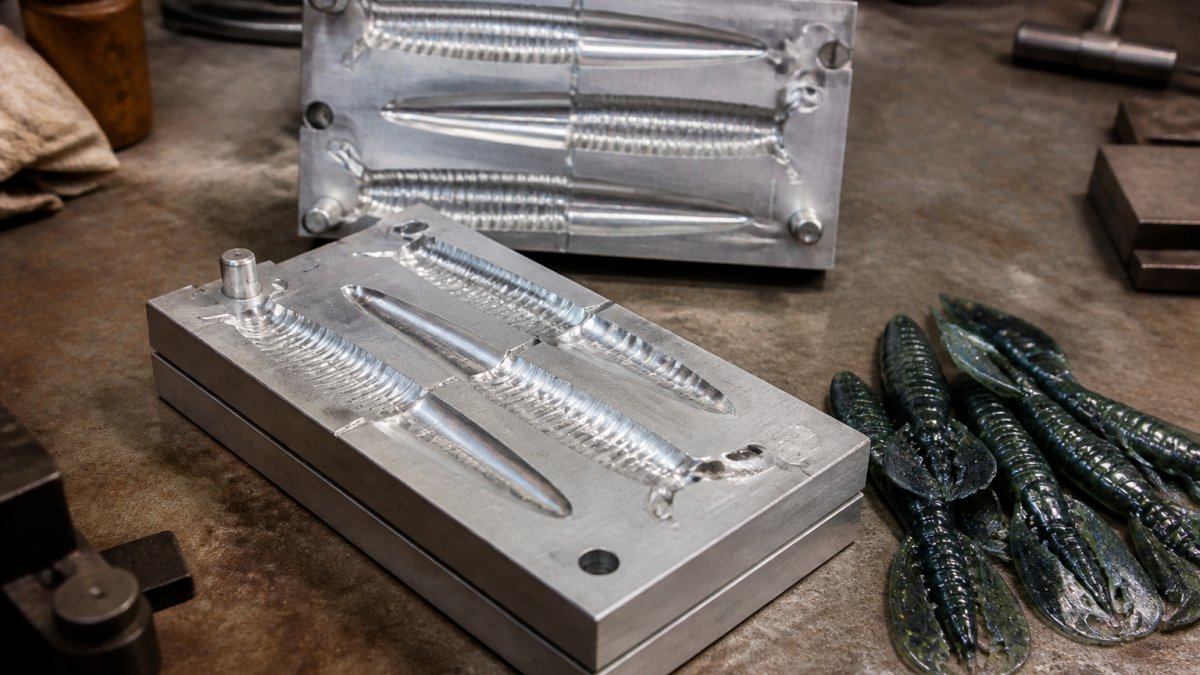
Last Updated: November 1, 2026
Quick Summary
Aluminum molds last longer because aluminum pulls heat out of hot plastic fast and spreads it evenly across the whole mold face, so each pour stresses the mold less. Fast, even cooling means lower peak temperatures and no hot spots, which reduces warping and cracking over many pours.
- Aluminum resists rust, so storage between sessions does no harm to the mold.
- Steel molds can handle more raw cycles, but steel costs far more up front and takes longer to heat and cool.
- The 6061 grade suits low-to-moderate volume and gentle resins, while 7075 earns its cost with abrasive fills or steady production.
- Filled resins with abrasive additives can wear a cavity faster than unfilled resin.
- Clean aluminum molds with soft tools and mild cleaners, and never clean a hot mold.
Table of Contents
- What Makes Aluminum Molds Last Longer
- Aluminum vs. Steel Molds: Which Lasts Longer for Soft Baits
- What Determines Aluminum Mold Lifespan
- Common Failure Modes and Early Warning Signs
- Soft Bait Mold Maintenance: A Step-by-Step Schedule
- How to Clean Aluminum Molds Without Damaging Them
- Design Practices That Extend Aluminum Mold Life
- Choosing the Right Mold for Your Bait-Making Setup
- Frequently Asked Questions
What Makes Aluminum Molds Last Longer
Aluminum molds can last longer because aluminum pulls heat out of hot plastic fast and evenly, so each pour stresses the mold less. A mold that cools quickly spends less time at punishing temperatures, and that slower wear adds up over many pours.
Here is the short version of why aluminum molds outlast the alternatives:
- Aluminum spreads heat across the whole mold face, not just where the plastic hits
- Fast cooling means shorter heat exposure per cycle
- Even cooling means less warping and cracking over time
- Aluminum resists rust, so storage between sessions does no harm
Storage matters too. Keeping a mold clean and dry between sessions helps it stay ready to pour.
Below, we break down the two forces that drive longevity: heat and wear.
Thermal Conductivity and Heat Dissipation
Heat is the number one killer of any mold. Aluminum handles it better than most materials because it conducts heat quickly and spreads it out.
When you pour hot plastic into a mold, the material near the cavity wall cools first. A fast-conducting metal pulls that heat away and spreads it across the whole block, protecting the mold two ways:
- Lower peak temperatures. The cavity wall never gets as hot, so the metal expands and contracts less.
- Even heat distribution. No hot spots means no localized stress that leads to cracks.
Fast cooling also cuts cycle time. You demold sooner and pour more baits per session, putting fewer heat cycles on the mold for the same output.
Wear Resistance Compared to Silicone and Resin
Aluminum is rigid and holds its shape, which helps it resist wear from repeated pours.
Here is what happens with soft molds:
Surface finish matters too. A polished aluminum cavity releases plastic cleanly, so you are not scraping or prying baits loose. Less prying means less scratching, and the mold stays smooth for years.
Aluminum vs. Steel Molds: Which Lasts Longer for Soft Baits
Steel molds can handle more raw cycles, while aluminum suits many soft bait makers well.
Steel is harder and more wear resistant, so a steel mold can handle more total cycles before it wears out. The catch is how you get there:
- Steel molds cost far more up front
- Steel takes longer to heat and cool, so cycle times stretch out
- Steel is heavy and needs more careful handling
For soft plastic bait making, you rarely push a mold into the millions of cycles where steel's edge pays off. Aluminum gives you fast cycles, even heat, and a service life that covers years of hobby or small-shop production.
Match the mold material to your actual production volume.
What Determines Aluminum Mold Lifespan
Three things decide how long an aluminum mold lasts: the alloy it is cut from, the mold class, and what you pour through it. Understanding how each one moves the needle lets you estimate your own service life instead of guessing.
Alloy Selection and Mold Class
Not all aluminum is equal. The alloy choice affects hardness, machinability, and how well the mold holds a polished surface. The two families you will encounter most in bait tooling are the 6061 and 7075 grades.
A harder, tighter-grain alloy resists wear at the cavity edges and holds detail longer, while softer alloys cut easily but dent and scratch sooner. As a rule of thumb, 6061 suits low-to-moderate volume and gentle resins; 7075 earns its cost when you run abrasive fills or steady production.
Resin Type, Abrasion, and Production Volume
What you pour matters as much as the mold itself. Filled resins carry additives that act like sandpaper on the cavity walls.
- Unfilled resin is generally gentler on a mold than filled resin.
- Filled resin with abrasive additives can wear a cavity faster.
- High production volume increases the total wear a mold sees.
Think of wear as adding up over pours. Alloy hardness, filler abrasiveness, and cycle count all influence how quickly a cavity wears.
A common mistake is blaming the mold when a bait tears or sticks. Often the culprit is an abrasive mix run at high volume with no cleaning between batches. Match your resin to your mold, clean more often with abrasive material, and track your cycle count so edge wear does not surprise you.
Common Failure Modes and Early Warning Signs
Aluminum molds often show early signs of wear before a larger problem develops. The key is knowing what each symptom means and whether it is still repairable.
Early warning signs to watch for:
- Sticking baits. Baits tearing on release mean the polished release layer is wearing or dirty, so plastic grips the cavity wall instead of sliding free.
- Flash at the seams. Plastic leaking past the mating faces means the faces are worn, nicked, or not closing flat. A single trapped plastic chip can hold the halves apart and cause flash on every pour until removed.
- Dull cavity detail. Fading texture or rounded edges signal slow surface erosion from abrasive resin and repeated demolding.
- Stiff moving elements. Pins and inserts that drag point to wear, galling, or buildup. Galling is metal-to-metal rubbing that transfers material and worsens each cycle if not cleaned and lubricated.
- White powdery spots. Oxidation starting on the surface. Aluminum forms a thin oxide layer when exposed to moisture, and left unchecked it pits the cavity. Clean and protect the mold.
The main failure modes and what drives them:
- Cavity wear from abrasive resin and repeated cycles. The edge rounds first, then the detail fades. Light wear responds to polishing; deep wear does not.
- Distortion from uneven heating or prying the mold open. Prying bends the halves out of flat, and once the faces no longer mate, flash becomes permanent until resurfacing.
- Corrosion from moisture left on the surface during storage. Oxidation pits the cavity, and pits cannot be polished out without changing the cavity dimensions.
- Worn moving elements that no longer align. Pins and inserts wear oval over time, and misalignment stresses the surrounding cavity.
Catching these signs early makes them easier to address. Inspecting the mold regularly helps you act on the first sign.
Soft Bait Mold Maintenance: A Step-by-Step Schedule
A steady maintenance routine can help keep a mold in good condition. It does not require special tools, just a habit. Here is the schedule we recommend.
| When | Task | Why It Matters |
|---|---|---|
| After every session | Wipe cavities, brush out flash, dry fully | Stops resin buildup and moisture damage |
| Weekly during heavy use | Inspect seams and moving elements | Catches wear before it spreads |
| Monthly | Light polish on cavities, check alignment | Restores release and keeps faces flat |
| Seasonal storage | Deep clean, dry, protect surface | Prevents oxidation and corrosion |
After every session:
- Let the mold cool completely
- Brush out any flash or plastic bits
- Wipe cavities with a soft cloth
- Dry every surface before closing
Monthly checks:
- Look for scratches or dull spots
- Test that pins and inserts move freely
- Confirm the halves close flat with no gap
How to Clean Aluminum Molds Without Damaging Them
Clean aluminum molds with soft tools and mild cleaners. Harsh abrasives and metal scrapers can scratch the cavity.
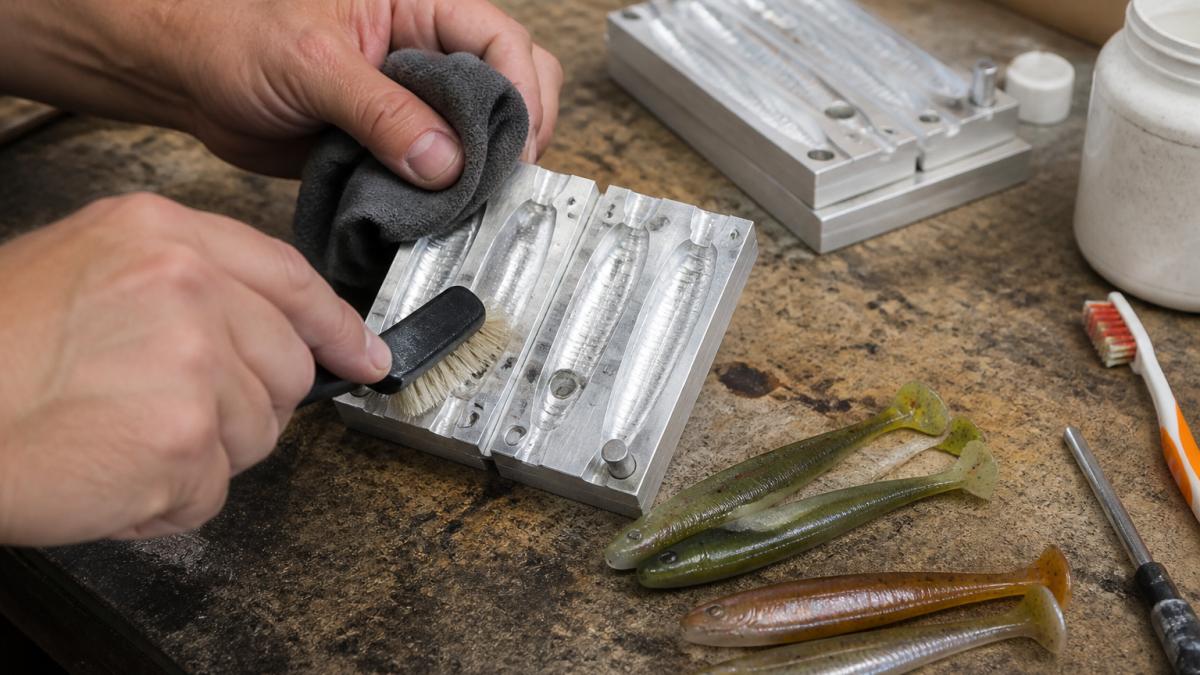
Follow these steps:
- Let the mold cool fully. Never clean a hot mold.
- Brush out loose flash with a soft brush.
- Wipe cavities with a soft cloth and a mild cleaner.
- Dry every surface completely.
- Store the mold closed and dry.
What to avoid:
- Metal scrapers and wire brushes
- Harsh solvents that strip the surface
- Leaving moisture in the cavities
Use a soft tool and let the cleaner do the work.
Design Practices That Extend Aluminum Mold Life
Good mold design does as much for longevity as good maintenance. A few design choices cut wear and stress before the first pour.
- Rounded cavity edges release baits easier and resist chipping.
- Even wall thickness spreads heat and reduces distortion.
- Proper draft angles let baits release without prying.
- Sturdy alignment pins keep the halves true and cut seam wear.
- Simple moving elements wear slower and are easier to service.
Part design matters too. A bait shape with deep undercuts forces you to pry it loose, and prying stresses the cavity. Design the bait so it releases clean, and the mold lasts longer.
Choosing the Right Mold for Your Bait-Making Setup
Pick the mold that matches your output and your resin, not the biggest or fanciest option. That single decision does more for mold lifespan than any other.
Use this simple decision tool:
- Just starting out? Choose a starter kit and a production-class aluminum mold. Learn on a mold built to last.
- Pouring abrasive, filled resin? Clean more often and expect faster wear. Choose a harder alloy and a higher mold class.
- High production volume? Step up to a higher mold class built for steady runs.
- Pouring gentle, unfilled resin at low volume? A standard aluminum mold will serve you for years.
Aluminum is not the answer for every case. For many bait makers, aluminum offers a practical balance of cycle speed and heat handling.
Fat Guys Fishing offers aluminum molds from under 1 inch to over 10 inches, plus starter kits for beginners and bargains.
Frequently Asked Questions
Why do aluminum fishing lure molds last longer than softer mold materials?
Aluminum holds its shape under repeated heat cycles. It also conducts heat evenly, so the plastic cools without hot spots that stress the mold.
How long do aluminum soft bait molds last?
Lifespan depends on alloy, resin type, and how you treat the mold. Heavy use with abrasive filled plastics can shorten service life. Track your cycle count and inspect cavity edges regularly so you catch wear before it affects bait quality.
What causes an aluminum fishing lure mold to wear out?
The main causes are abrasive filled resins, repeated heating and cooling, scratching during cleaning, and corrosion from moisture left on the surface. Storing molds dry and cleaning them with soft tools can help reduce wear.
How should you clean and store an aluminum lure mold?
Let the mold cool fully, wipe out residue with a soft cloth, and use a nylon brush on stubborn spots. Avoid metal scrapers and harsh solvents that strip the surface. Dry the mold completely, apply a thin protective coat if recommended, and store it closed in a dry place. This routine can help limit oxidation and keep the cavity in good condition.
The challenge is simple: cheap molds crack, stick, and quit on you, and that kills the fun of making your own baits. Fat Guys Fishing solves that with aluminum molds built for fast cooling, clean release, and years of service. Our catalog gives you sizes from under 1 inch to over 10 inches, specialized Slayer and Slide systems for precise action, and starter kits that make the first pour easy. Get started with Fat Guys Fishing and pour custom baits that hold up, batch after batch.
