Posted by Editorial Team on Nov 26th 2026
Precision Molds for High Action Baits: A Buyer's Guide
Last Updated: November 26, 2026
Quick Summary
Precision molds are cavities cut to exact dimensions so every bait matches the master design, shot after shot. They are defined by dimensional accuracy, smooth surface finish, and clean release, and aluminum is widely regarded as durable with fast heat transfer for quick sets and clean demolding.
- Match the mold's design family to the action you want before choosing a color.
- Thin, wide paddles flex at low speed; thick, narrow tails need faster retrieves.
- Under about 50 baits, silicone or resin is a reasonable prototype path.
- Four to six cavities is the sweet spot for most hobbyists and club anglers.
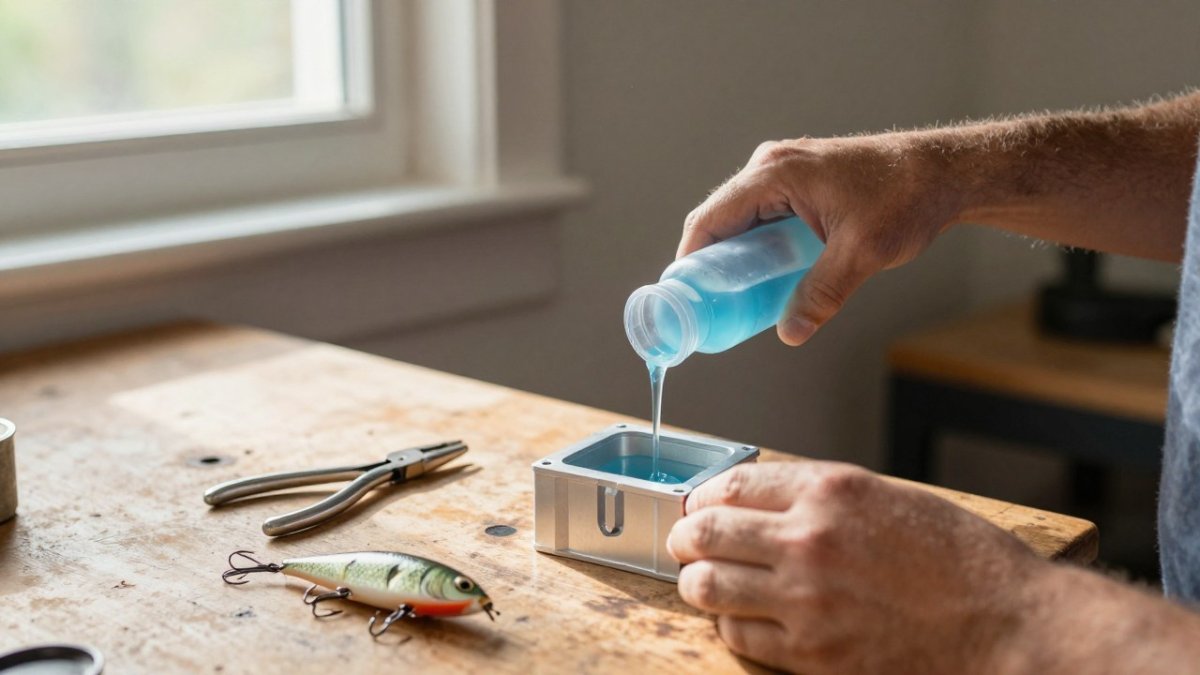
- Preheat the mold and inject in one smooth, steady push to prevent short shots.
Table of Contents
- What Makes a Mold a Precision Mold
- Soft Bait Mold Selection: Matching Design to Action
- High-Action Swimbait Molds: Paddletails and Tail Lures
- Aluminum Fishing Lure Molds vs. Other Mold Materials
- Frequently Asked Questions
What Makes a Mold a Precision Mold
A precision mold is a cavity cut to exact dimensions so every bait it produces matches the master design, shot after shot. Aluminum molds are built where that accuracy is the whole point: if the cavity is off, the bait swims off.
Most anglers assume a mold is just a shape. It isn't.
Three things define the category:
- Dimensional accuracy: cavity walls, tail thickness, and body taper match the design spec within tight tolerances.
- Surface finish: smooth interior walls let plastic flow fully before it sets.
- Clean release: the finished bait lifts out without tearing, which matters most on thin tails and fins.
Get all three right and the mold disappears into the background. Get any one wrong and you fight every pour.
Dimensional Accuracy and Clean Release
Dimensional accuracy means the molded bait matches the intended profile, not a close cousin. A tail a few thousandths too thick loses its wiggle; a slightly narrow body sits differently in the water.
Clean release is the other half.
Watch out: forcing a stuck bait out with a screwdriver or knife is the fastest way to gouge a cavity. Once that wall is scored, every bait from that cavity carries the flaw.
Soft Bait Mold Selection: Matching Design to Action
Soft bait mold selection starts with the action you want, not the shape you like. Pick the movement first, then find the cavity that produces it.
This is where most beginners go wrong. They buy a mold because the bait looks good in a photo, then discover it does nothing on a slow retrieve.
Four design families cover most fishing situations:
- Paddletail and boot-tail designs for steady swimming action and vibration.
- Ribbon and curl tails for slow-speed thump.
- Straight finesse profiles for subtle motion on pressured fish.
Match the family to your water before you match the color.
Tail Movement, Vibration, and Swimming Action
Tail movement is the measurable output of a mold design.
Bait profile controls how the body tracks. A tapered body rolls less and holds a straight line; a bulky body pushes more water and wobbles. Neither is better.
What most guides miss is that tail thickness and body taper must work together. A thin tail on a fat body stalls because the body won't let the tail load and snap.
High-Action Swimbait Molds: Paddletails and Tail Lures
High-action swimbait molds are built around the tail, because that is where swimming action comes from.
Paddletails are the workhorse: a well-cut paddle catches water immediately and keeps thumping on a slow, steady reel.
The mold's job is consistency. A swimbait that swims true on the first cast and rolls on the tenth is a mold problem, not a plastic problem.
For tournament anglers, that repeatability is the whole value. You dial in one bait, then pour twenty identical ones.
Aluminum Fishing Lure Molds vs. Other Mold Materials
Aluminum is widely regarded as durable and as a good conductor of heat, which is why many pourers choose it. Aluminum pulls heat out of hot plastic fast, so baits set quickly and release cleanly.
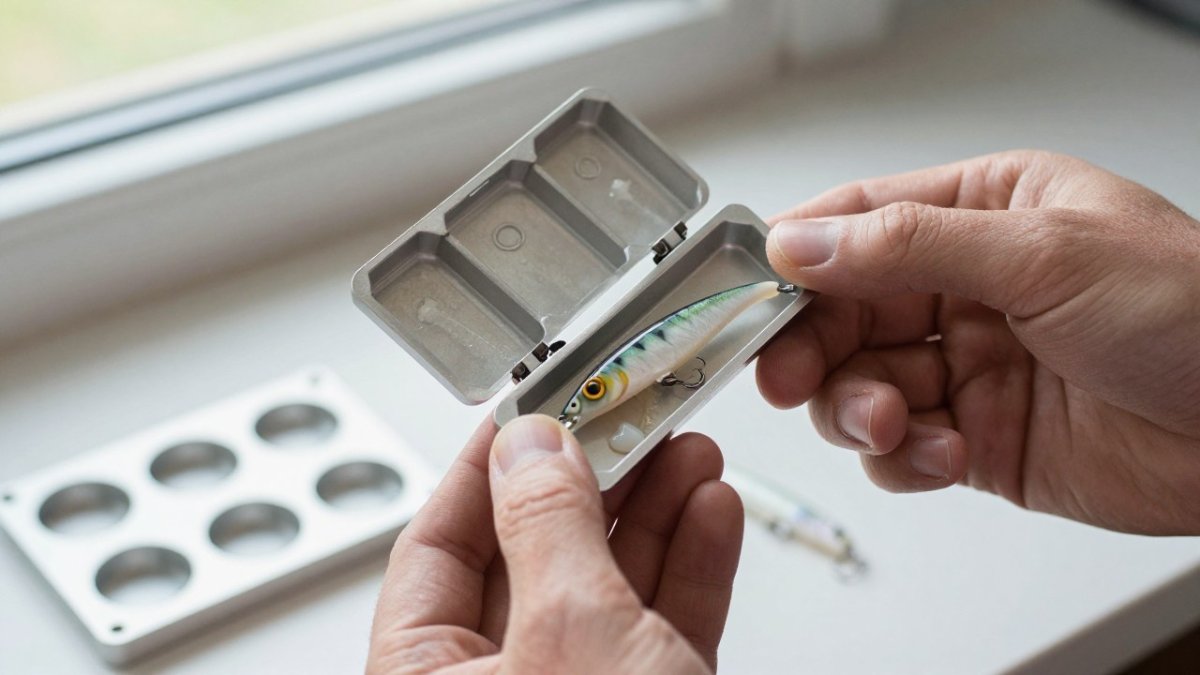
If you are new to the craft, start with a starter kit and a mid-size cavity count. Browse the full catalog and find the cavity that matches your water.
The gap between a bait that catches fish and one that just looks right is usually the mold. Fat Guys Fishing provides aluminum molds for pouring soft plastic baits.
Frequently Asked Questions
What makes a soft plastic bait mold a precision mold?
A precision mold is cut to tight tolerances so each cavity matches the bait design exactly, from the tail thickness to the body profile. That accuracy delivers consistent bait profile, dimensional accuracy, and a clean release, so every finished bait swims the same way. Cheaper molds with loose tolerances produce baits that vary in weight and action, which matters most with high-action baits where small differences in tail movement change how the lure performs.
Which mold designs create the most action in a soft plastic bait?
Tail design drives most of the action. Paddletails and boot-tail swimbaits produce strong swimming action and vibration at slow retrieve speeds, while ribbed bodies and thin tail sections add subtle motion for finesse fishing. The mold needs to hold those thin sections accurately, because a tail that is too thick or uneven kills the tail movement. Look for precision molds with well-defined tail cavities if high-action baits are your goal.
Are aluminum molds better for making soft plastic fishing baits?
Aluminum is commonly chosen for repeated pouring because it conducts heat quickly, which can help the cavity fill before the plastic sets. Results depend on your technique and materials.
How can I get consistent baits from a soft plastic mold?
Consistency comes from the mold and the injection process together. Use a precision aluminum mold, keep your plastisol at a steady temperature, and inject in one smooth push so the cavity fills before the plastic cools. Vent air properly and avoid over-pressuring the injector. If you see short shots or bubbles, warm the mold slightly and slow the pour. A clean release and even cavity fill are what give you repeatable finished baits.
