Posted by Editorial Team on Nov 25th 2026
How to Calculate the Cost of Making Your Own Lures
Last Updated: October 30, 2026
Quick Summary
The cost of making your own lures comes down to molds, plastic, and hardware, and your price per bait drops with every pour once the mold is paid off. Calculate cost per bait by dividing total batch cost, including the mold share, by usable baits only.
- Aluminum molds are generally more durable than silicone for repeated pouring, so invest there first.
- Buy one good mold before five, and buy plastic in the size you will pour in a month.
- Count only fishable baits in the denominator; culls and rejects count as zero.
- Price homemade lures by adding your time and a 2x to 3x margin to true cost.
- Making your own lures saves money once you pour enough batches to cover the mold.
Table of Contents
- What It Really Costs to Make Your Own Lures
- The Cost to Start Making Soft Plastic Baits
- Soft Plastic Bait Making Supplies and What Each One Costs
- Calculating Your Cost per Homemade Fishing Lure
- How to Price Homemade Fishing Lures for Sale or Trade
- DIY vs. Store-Bought: When Making Your Own Lures Saves Money
- Build Your First Batch with a Starter Kit
- Frequently Asked Questions
What It Really Costs to Make Your Own Lures
The cost of making your own lures comes down to three things: molds, plastic, and hardware. Buy smart once, and your price per bait drops with every pour. That is the whole game.
Fat Guys Fishing supplies aluminum molds to new pourers. The question we hear most is simple: is this worth it? The honest answer is yes, but only if you count your costs correctly.
Below, we break down what you will actually spend, how to calculate your cost per homemade fishing lure, and when DIY beats store-bought.
The Cost to Start Making Soft Plastic Baits
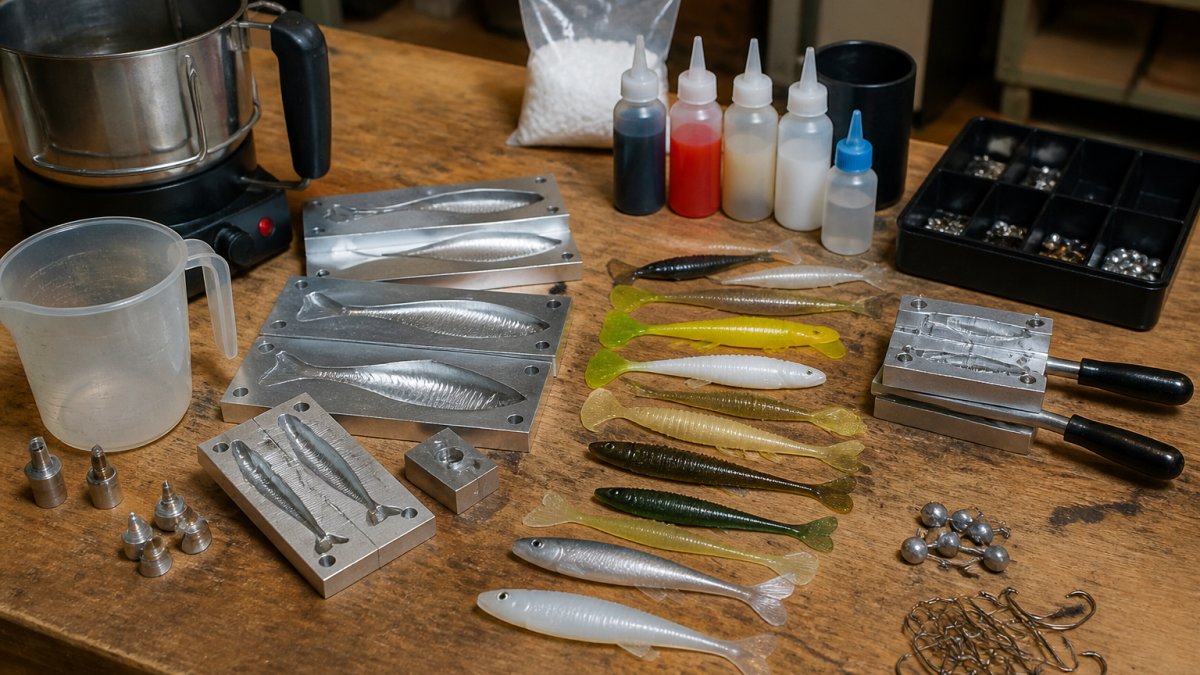
The cost to start making soft plastic baits breaks into four buckets: molds, plastic, colorant and glitter, and a heat source. Most beginners overspend on one bucket and underspend on another.
Here is the split that matters:
- Molds: the biggest one-time cost, and the one that lasts
- Plastic: a recurring cost that scales with how much you pour
- Colorant and glitter: small per bottle, but they add up
- Melting and pouring gear: a pot, a thermometer, and something to stir with
Aluminum molds are generally more durable than silicone for repeated pouring, so the mold is a sensible place to invest.
Soft Plastic Bait Making Supplies and What Each One Costs
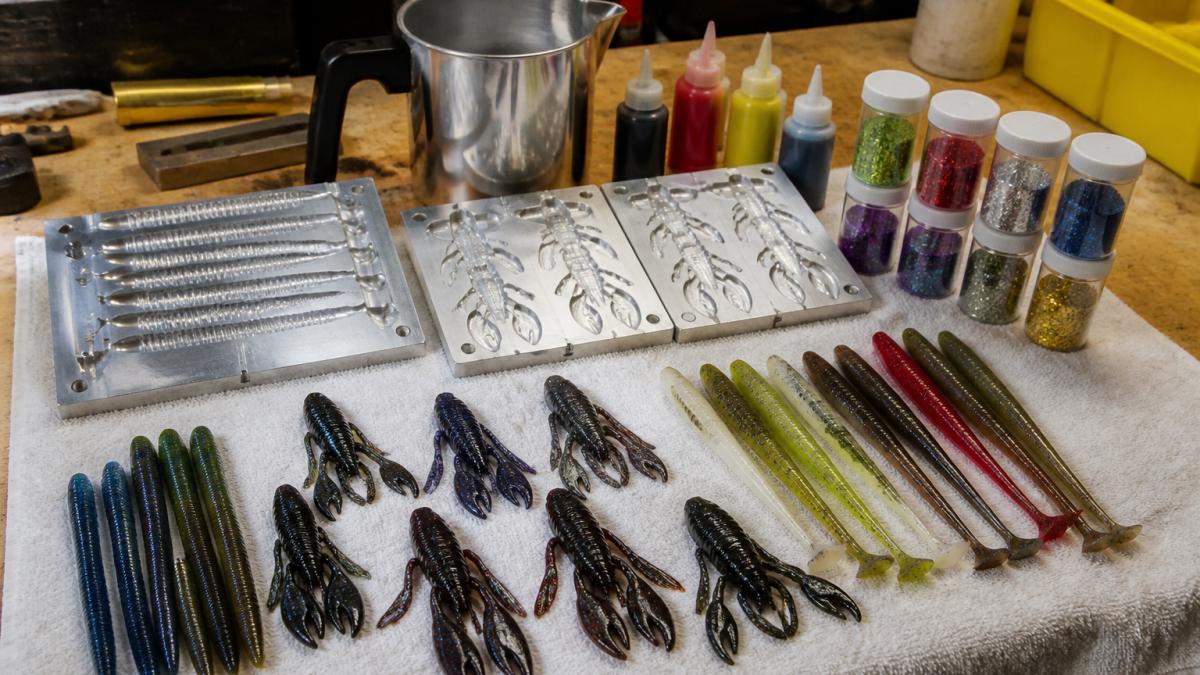
Soft plastic bait making supplies fall into four groups: molds, plastic, color and additives, and pouring equipment. Each group has a different cost pattern, and knowing which ones repeat is the key to budgeting.
| Supply | One-Time or Recurring | What Drives the Cost |
|---|---|---|
| Aluminum molds | One-time | Mold size, cavity count, series |
| Liquid plastic | Recurring | Volume poured per batch |
| Colorant and glitter | Recurring | Number of colors you run |
| Pouring pot and thermometer | One-time | Batch size you plan to run |
| Hooks, weights, inserts | Recurring | Bait style and size |
Two rules save real money here. First, buy one good mold before you buy five. Second, buy plastic in the size you will actually pour in a month, not the size that looks like a bargain.
Calculating Your Cost per Homemade Fishing Lure
Your cost per homemade fishing lure is total batch cost divided by the number of usable baits. Count every input, not just plastic.
Here is the formula we recommend:
Cost per bait = (plastic + colorant + glitter + hardware + mold share) ÷ usable baits
The mold share is the step most people skip. Divide the mold's price by the number of baits you expect to pour from it over its life. The mold's share of cost shrinks as you pour more batches from it.
Then count only baits you would actually fish. Culls, short shots, and bubble-filled rejects belong in the denominator as zero. If a batch of 20 yields 16 good baits, your real cost is batch cost divided by 16.
Run this math once and the picture gets clear fast.
How to Price Homemade Fishing Lures for Sale or Trade
Pricing homemade fishing lures starts with your true cost, then adds labor and margin. Never price from material cost alone.
Use this three-step method:
- Start with cost per bait. Use the formula above, including the mold share.
- Add your time. Set an hourly rate you would accept for any other work, then divide it by baits produced per hour.
- Add margin. A common approach is 2x to 3x your total cost for direct sales, higher for custom colors and one-off profiles.
Watch out: pricing at material cost only is the fastest way to turn a hobby into unpaid labor. The mold share and your time are real costs, even when they do not show up on a receipt.
For trades, price in baits rather than dollars. A swap of ten custom craws for ten worms is fair when both sides know their cost per bait.
DIY vs. Store-Bought: When Making Your Own Lures Saves Money
Making your own lures saves money when you fish often, want custom profiles, and will pour enough batches to pay off the mold. It costs more when you pour once and quit.
Here is how the two paths compare:
- DIY wins if you fish weekly, want colors and sizes no shelf carries, and enjoy the process
- Store-bought wins if you need a handful of baits a season or want zero setup
- DIY wins big for tournament anglers who need a specific action and profile matched to local water
The break-even point is the mold. Once you have poured enough baits to cover the mold's cost, every batch after that is close to plastic-and-colorant money. That is when the savings become obvious.
There is a second payoff that does not show up in the math: control. You can match the hatch in your local lake, down to size and shade, instead of settling for the closest thing on the pegboard.
Build Your First Batch with a Starter Kit
A starter kit removes the guesswork from your first pour. Fat Guys Fishing offers starter kits for beginners to help get started with bait pouring.
Our molds run from under 1 inch to over 10 inches, so you can match the bait to your water. Our catalog includes Slayer Systems, Slide Systems, and 2 Color Baits series for custom profiles.
The math only gets better from there.
Frequently Asked Questions
How much does it cost to make your own fishing lures?
Your cost per bait depends on mold size, plastic volume, and how many colors or flakes you add. A single soft plastic bait typically uses a small amount of liquid plastic plus colorant and glitter, so the material cost per piece is a fraction of retail. The bigger factor is the one-time setup: molds, a pouring pot, safety gear, and plastic. Once you own the equipment, each additional batch costs only plastic and additives. Check Fat Guys Fishing for current mold and starter kit pricing.
Is it cheaper to make your own fishing lures or buy them?
Making your own lures becomes cheaper once you pour enough baits to spread the equipment cost across them. If you fish a handful of baits a year, buying pre-made is simpler. If you go through soft plastics regularly, or you want custom profiles and colors you cannot buy off the shelf, the per-bait cost of pouring your own drops well below retail. The break-even point depends on your mold choice and how often you fish.
What supplies do you need to make soft plastic fishing lures?
The core soft plastic bait making supplies are an aluminum mold, liquid plastisol, colorant, glitter, a heat-safe pouring pot, a thermometer, stirring tools, and eye protection with gloves. Aluminum molds are a durable option for repeated pouring with hot plastic. Add a dedicated work surface you do not mind getting plastic on.
How do you calculate the cost per homemade fishing lure?
Add the cost of plastic used per pour, colorant, glitter, and any inserts, then divide by the number of baits the mold produces. To get a true figure, add a share of your equipment cost divided by the total baits you expect to pour over the mold's life. Track a few batches in a notebook: record how much plastic each batch used and how many usable baits came out. That gives you a real number instead of a guess.
