Posted by Editorial Team on Nov 24th 2026
7 Custom Lure Mold Tips for Species-Specific Baits

Last Updated: November 24, 2026
Quick Summary
Custom lure molds for specific species match a bait's geometry to how a fish feeds, so body width, fall rate and tail flex trigger strikes instead of compromising like stock designs. Start by defining your target species, choosing aluminum over silicone, and sending a clear design brief with a sketch or CAD file.
- Bass molds need a wide body, keeled belly and thin tail hinge for a slow fall with hard kick.
- Crappie molds should be under two inches with a narrow body and fine, quivering tail.
- Aluminum molds last thousands of pours while silicone lasts hundreds at best.
- A design brief covers profile, gate placement, venting, hook pocket and material.
- Air bubbles, short shots and flash trace to temperature, venting or gate placement.
Table of Contents
- Why Species-Specific Custom Lure Molds Beat Stock Designs
- Hydrodynamics and Bait Action by Species
- Largemouth Bass: Wide Body, Slow Fall, Hard Tail Kick
- Crappie: Thin Profile, Slow Quiver, Long Suspension
- Walleye: Slim Body, Tight Wiggle, Straight Track
- Pike and Muskie: Long Profile, Wide Wobble, Hard Track
- Saltwater and Big-Game: Water Push and Track Stability
- The Four Variables You Control in the Mold
- Aluminum vs. Silicone: Which Mold Material Lasts
- How to Specify Requirements to a Custom Bait Mold Maker
- Custom Swimbait Molds for Big-Game Action
- Custom Crappie Jig Molds for Finesse Presentations
- Creature Bait Molds for Bass and Bottom Contact
- Troubleshooting Injection Defects and Mold Longevity
- Ordering Your First Custom Lure Mold
- Frequently Asked Questions
Why Species-Specific Custom Lure Molds Beat Stock Designs
A bass and a crappie do not chase the same thing. At Fat Guys Fishing, we've watched too many anglers buy a generic mold, pour a few baits, and wonder why the fish ignore them.
The answer usually sits in the water displacement and fall rate of the bait, not in the color or the scent.
Stock molds are engineered for the average angler fishing the average lake. That means compromise. A mold that produces a decent all-around worm rarely produces a bait that excels at anything.
Below, we'll show you exactly how to pick a mold material, spec a design, and pour baits that match your target fish.
Hydrodynamics and Bait Action by Species
Bait action comes down to three forces: how the bait displaces water, how it falls, and how it tracks on the retrieve. Each fish species keys on a different combination, and the geometry of the mold cavity is what sets those forces before the bait ever hits the water.
Most guides stop at "match the hatch." The useful version is mechanical: for each target species, there is a specific relationship between body width, fall rate, and tail flex that triggers a strike, and a mold cut to the wrong side of that relationship will underperform no matter how good the pour is.
Largemouth Bass: Wide Body, Slow Fall, Hard Tail Kick
Bass are ambush predators that attack from below and behind. They key on a bait that displaces a lot of water on the fall and kicks hard at low retrieve speeds.
A mold built for bass should prioritize a keeled belly for track stability and a tail cavity deep enough that the plastic stays thin at the hinge. If the tail is too thick, the bait glides instead of kicking, and bass ignore it on the fall.
Crappie: Thin Profile, Slow Quiver, Long Suspension
Crappie are sight-feeders that suspend and pick off small forage. They respond to a thin, quivering profile that stays in the strike zone on a slow fall. A bait under two inches with a fine tail does more than a big, loud profile because crappie feed by sight at close range, not by sensing water displacement from a distance.
The mold spec here is the opposite of bass: narrow body, shallow cavity, and a tail section thin enough to quiver at the slightest movement.
Walleye: Slim Body, Tight Wiggle, Straight Track
Walleye feed in low light and key on a tight, high-frequency wiggle rather than a wide thump. A slim body with a narrow tail that vibrates at speed tracks straighter and triggers walleye more reliably than a wide bait. The mold spec is a long, narrow cavity with a keeled belly and a tail thin enough to vibrate but stiff enough not to roll.
Pike and Muskie: Long Profile, Wide Wobble, Hard Track
Pike and muskie are ambush predators that strike big forage. They respond to a long profile with a wide, slow wobble that holds a straight track at speed. The mold spec is a long cavity with a keeled belly and a jointed or paddle tail that kicks without rolling. An off-center gate will pour a bait that lists to one side, and no amount of tuning fixes a lopsided body.
Saltwater and Big-Game: Water Push and Track Stability
Saltwater and big-game species chase baits that push a lot of water and hold a straight track at speed. The mold spec is a wide body with a heavy keel and a tail that kicks hard without rolling. Symmetry is everything here, a properly vented aluminum cavity keeps the body symmetrical, and symmetry is what keeps the bait running true at trolling speed.
The Four Variables You Control in the Mold
- Water displacement: wider bodies push more water and call fish in from farther away; narrow bodies slip through the water with less resistance
- Fall rate: thin baits sink slower and stay in the strike zone longer; wide baits fall faster and trigger reaction strikes
- Tail and body flex: softer, thinner sections kick at lower speeds; thicker sections need more speed to move
- Track stability: a keeled belly keeps a swimbait from rolling at high retrieve speeds
Get these four right for your target fish, and the bait does the work. Get them wrong, and you're fishing a bait built for someone else's lake.
Aluminum vs. Silicone: Which Mold Material Lasts
Aluminum molds generally hold precise cavity dimensions over repeated pours, while silicone molds tend to lose detail over time. For anyone pouring more than a handful of baits, aluminum wins on durability and consistency. The real question is not which material is better in the abstract, it is when the upfront cost of aluminum pays back against the replacement cost of silicone.
Here's how the two stack up:
| Feature | CNC Aluminum | Silicone |
|---|---|---|
| Lifespan | Thousands of pours | Hundreds at best |
| Detail retention | Sharp, consistent | Softens with heat cycles |
| Heat transfer | Fast, even fills | Slower, uneven |
| Surface finish | Smooth, low-friction | Porous, grabs plastic |
| Upfront cost | Higher | Lower |
| Best for | Production runs | Quick experiments |
The Longevity Science: Why Aluminum Outlasts Silicone
Aluminum conducts heat away from the plastic quickly, which helps with fill consistency and is a reason many makers prefer it for production work.
Silicone molds can soften and lose detail over time, and many makers find aluminum more consistent for regular pouring.
The Cost-Benefit Math: When Custom Aluminum Pays Back
A common pattern among small makers is to start with silicone for a one-off shape and move to aluminum once a design proves itself.
For a hobbyist testing a single one-off shape that will never be poured again, silicone is the rational choice. For anyone pouring regularly or chasing consistent bait action across a production run, aluminum is the lower-cost option over the life of the mold.
Surface Finish and Defect Rate
Aluminum's smooth surface can help baits release cleanly, while porous silicone surfaces may grab plastic more readily.
Best for: anyone pouring regularly or chasing consistent bait action. Skip if: you're testing a single one-off shape and will never pour it again.
How to Specify Requirements to a Custom Bait Mold Maker
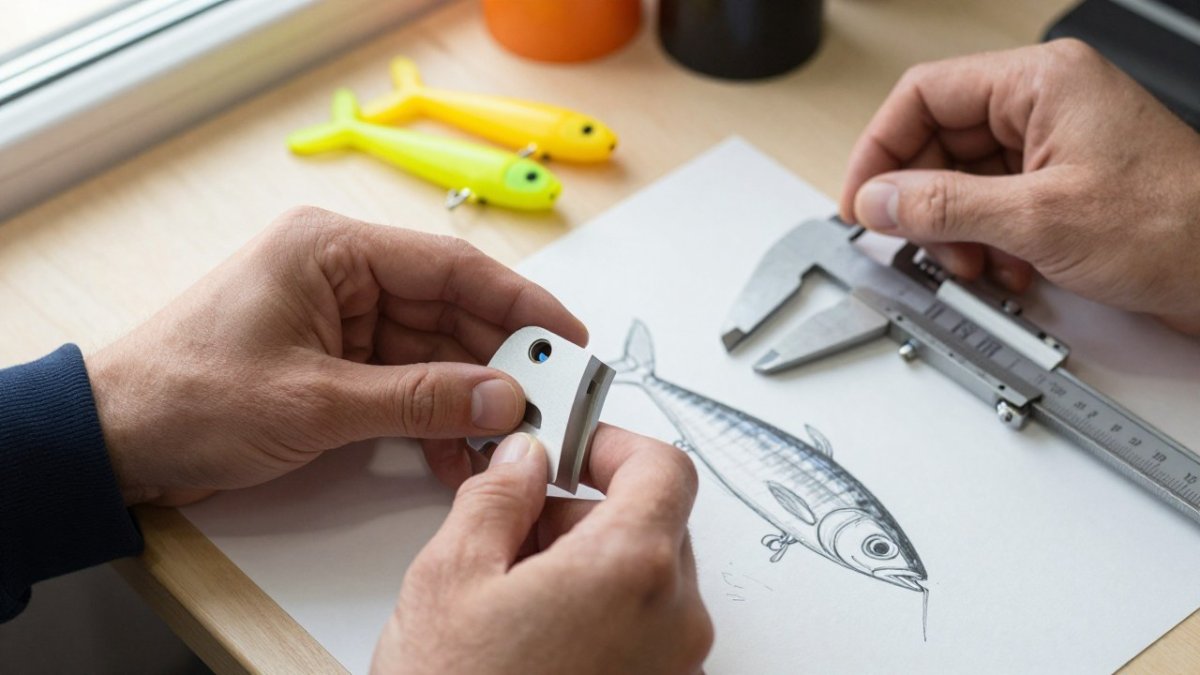
Start with a written design brief that states the target species, bait length, fall rate, and action, then hand it to your custom bait mold maker along with a sketch or CAD file. Vague requests get generic molds.
A good brief covers five things: profile, gate placement, venting, hook pocket, and material.
The Design Brief: Profile, Gate, and Venting
- Profile: overall length, body width, and tail shape, matched to your target species
- Gate placement: where plastic enters the cavity, which controls flow and fill
- Venting: air escape channels that prevent trapped bubbles and short shots
- Hook pocket: slot depth and position for your preferred hook
- Material: aluminum for longevity, silicone only for throwaway prototypes
Custom Swimbait Molds for Big-Game Action
Custom swimbait molds are built for a straight, hard-thumping track that holds up at speed. Big fish hit big baits, and a swimbait needs a keeled belly and a jointed or paddle tail that kicks without rolling.
Our Slide Systems line is among the series available for larger profiles. The key spec here is track stability. A swimbait that rolls at high speed spooks fish instead of drawing them.
Watch out: an off-center gate will pour a bait that lists to one side, and no amount of tuning fixes a lopsided body.
Custom Crappie Jig Molds for Finesse Presentations
Custom crappie jig molds produce small, thin-profile baits that fall slowly and quiver on the drop. Crappie key on subtle movement, so a bait under two inches with a light tail does more than a big, loud profile.
Small cavities are less forgiving than large ones. Plastic cools fast in a thin channel, so venting and gate placement matter more here than anywhere else. If you're chasing suspended crappie, a slow-fall bait with a fine tail is the spec to build around.
Creature Bait Molds for Bass and Bottom Contact
Creature bait molds give bass anglers a wide, slow-falling bait with flapping appendages that trigger reaction strikes on bottom contact. The profile is the whole point: bulk to push water, arms and claws to move when the bait settles.
Bass inhale creatures off the bottom, so fall rate and appendage flex decide whether the bait gets eaten or ignored. A softer plastic in a well-vented cavity lets the claws flutter instead of locking up.
Troubleshooting Injection Defects and Mold Longevity
Most injection defects trace to temperature, venting, or gate placement, and fixing them extends mold life. Air bubbles, short shots, and flash are the three you'll meet first.
- Air bubbles: cold plastic or blocked vents; warm the mold and clear vent channels
- Short shots: plastic cools before it fills; raise temp and widen the gate
- Flash: too much clamp pressure or worn cavity edges; check alignment
- Burned spots: overheated plastic; lower the pot temperature
For longevity, clean cavities after every session, store molds dry, and never pry baits out with metal tools. A CNC machined aluminum mold treated well will outlast the angler who bought it. That's the difference between a tool and a disposable.
Ordering Your First Custom Lure Mold
Order your first custom lure mold by defining your target species, choosing aluminum over silicone, and sending a clear design brief with a sketch or CAD file. Start simple, pour a test batch, and refine from there.
U.S. Fish & Wildlife Service tracks species and habitat data that can help you match a bait profile to what your local fish actually eat.
Building baits that match your water takes the right mold and a little patience.
Frequently Asked Questions
How do I choose a lure mold for a specific fish species?
Match the bait profile and action to how the fish feeds. For crappie, pick molds under 2 inches with a tight wiggle; for bass, creature bait molds in the 3.5 to 5 inch range give bottom-contact action; for big swimbait fish, choose a custom swimbait mold with a jointed or paddle-tail profile. Also match hook pocket size to your preferred hook and confirm the mold handles the plastic viscosity you pour.
Can aluminum bait molds be customized?
Yes. A custom bait mold maker can machine a CNC aluminum mold to your exact profile, gate placement, and venting. Provide a 3D CAD file or a dimensioned sketch, state target bait length and weight, and confirm the mold cavity count you need. Fat Guys Fishing offers aluminum molds from under 1 inch to over 10 inches, including Slayer and Slide systems.
What details should I provide to a custom bait mold maker?
Give the maker the target species, bait length and weight, desired action (tight wiggle, wide roll, or glide), hook pocket size, and the plastic you plan to pour. Include a 3D CAD design or dimensioned drawing, note gate and venting preferences, and specify cavity count and production run size. Clear hydrodynamics goals and material compatibility notes reduce back-and-forth and help the maker hit your bait profile on the first cut.
How much can I save making my own soft plastic baits versus buying pre-made?
Savings depend on how many baits you pour and your mold and plastic costs. A single aluminum mold supports many production runs, so cost per bait drops as volume rises. Factor in plastic, colorant, and your time. For anglers who fish often or need custom profiles unavailable at retail, DIY pouring can be cost-effective; for occasional anglers, stock baits may be cheaper. Check Fat Guys Fishing for current mold and starter kit pricing.
